


Animals
Lincoln Children’s Zoo is home to over 400 animals including giraffes, cheetahs, tigers, giant anteaters, red pandas, Humboldt penguins, ring-tailed lemurs, and Galapagos tortoises. Learn more about each of the animals that live here by exploring the areas below.
*This is not an all inclusive list of the animals at Lincoln Children's Zoo


-
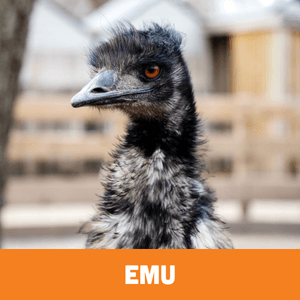
Emu
Dromaius novaehollandiaeCONSERVATION STATUS
Least ConcernNATURAL HABITAT
Emus are found in eucalyptus forests, woodlands, desert shrub lands, and sand plains.DIET
IN THE WILD – Seeds, fruits, flowers, young shoots, insects, and small invertebrates
IN THE ZOO – Specialized grain and fruitFASCINATING FACTS
• Emus are fast runners able to reach speeds of 30 mph.
• Males create a nest and sit on the eggs until they hatch.
• Emu eggs are dark green and the size of an average avocado.
• Chicks are born able to walk and feed themselves.
• They are a bird, but they do not fly.
• Emus grow to be between five and six feet tall. -
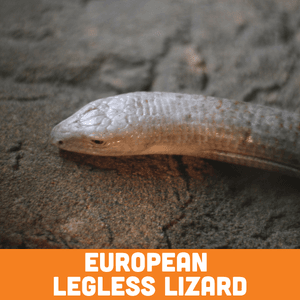
European Legless Lizard
Pseudopus apodusCONSERVATION STATUS
Least ConcernNATURAL HABITAT
European legless lizards are found in Southern Europe to central Asia.DIET
IN THE WILD – Insects
IN THE ZOO – Words and cricketsFASCINATING FACTS
• They are lizards that look like a snake.
• They burrow by using their nose as a shovel.
• European legless lizards can drop their tails as a defense mechanism. -
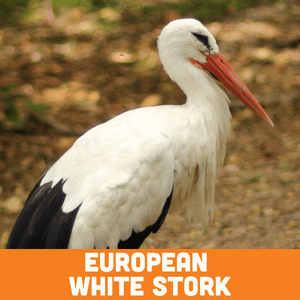
European White Stork
Ciconia ciconiaCONSERVATION STATUS
Least ConcernNATURAL HABITAT
The European white stork prefers open lands without tall trees or thick vegetation, usually in or near wetlands.DIET
IN THE WILD – Insects, worms, frogs, fish, lizards, snakes, and small rodents
IN THE ZOO – Fish, meat, and specially formulated grainFASCINATING FACTS
• Storks build large nests that can reach lengths of more than 7-feet across.
• They can eat up to 60 percent of their body weight per day.
• They fly by soaring on warm air currents, with long, broad wings that flap occasionally.
• They nest on roofs and chimneys of houses in the spring. -
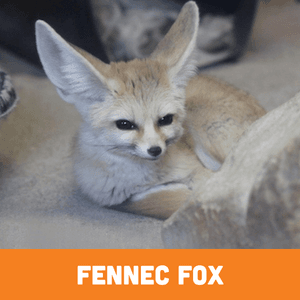
Fennec Fox
Vulpes zerdaCONSERVATION STATUS
Least ConcernNATURAL HABITAT
The fennec fox lives in the dry sandy regions of the African Sahara desert.DIET
IN THE WILD – Fruits, insects, plants, eggs, and small rodents
IN THE ZOO – Fruits, insects, rodents, and canine dietFASCINATING FACTS
• Fennec foxes are the world's smallest species of fox.
• Their large ears dissipate heat to keep them cool.
• Their hearing is so sensitive that they can hear prey moving underground.
• Their hairy feet protect them against hot desert sand.
• They only weigh two to three pounds. -
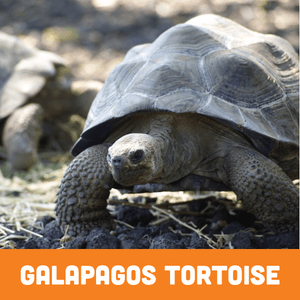
Galapagos Tortoise
Chelonoidis nigra microphyesCONSERVATION STATUS
VulnerableNATURAL HABITAT
Galapagos tortoises are found on the Galápagos Islands. They live in hot, dry areas with sparse vegetation or cool, wet areas with lush ground vegetation.DIET
IN THE WILD – Grasses, vines, cactus fruit, fallen fruit, and assorted vegetation
IN THE ZOO – Various grasses and hayFASCINATING FACTS
• They can live to be over 100 years old.
• The oldest recorded age is 171 years old.
• Adults average 5 feet in length and 475 pounds.
• They move at 0.16 mph compared to humans who walk at 2.8 mph. -
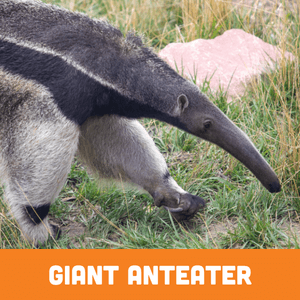
Giant Anteater
Myrmecophaga tridactylaCONSERVATION STATUS
VulnerableNATURAL HABITAT
Giant anteaters are found in grasslands, savannas, and open areas of tropical forests.DIET
IN THE WILD – Termites, ants, insect larvae, beetles, and occasionally fruit
IN THE ZOO – Specially formulated insectivore diet, insects, and fruitFASCINATING FACTS
• Giant anteaters do not have teeth; instead, they have a tongue that is 2 feet in length.
• Their tongue is coated in a sticky saliva allowing them to slurp up ants and termites. They can eat up to 30,000 insects a day.
• If threatened, they may make a roaring sound, but they typically will remain non-vocal. They will often rear up on their hind quarters and swipe with their long front claws.
• In order to avoid being bit by an ant during feeding, the giant anteater feeds for only a minute before moving on to the next colony.
• They have one of the lowest body temperatures of any mammal at 91° Fahrenheit, which is most likely due to their insect diet that is very low in calories.
• Giant anteaters are great swimmers, using the freestyle stroke and their long nose as a snorkel. -
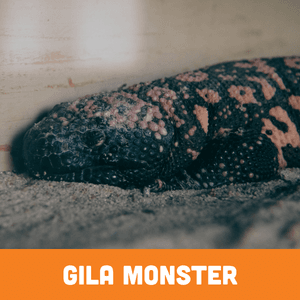
Gila Monster
Heloderma suspectumCONSERVATION STATUS
Near ThreatenedNATURAL HABITAT
The Gila monster is found in scrublands, deserts, and oak woodlands.DIET
IN THE WILD – Birds, eggs, frogs, lizards, and insects
IN THE ZOO – RodentsFASCINATING FACTS
• Gila monsters are the only venomous lizard native to the United States.
• They store fat in their tails during the winter months.
• They may spend more than 95% of their life in underground burrows.
• A protein found in their saliva has been used in FDA approved treatments for type 2 diabetes. -
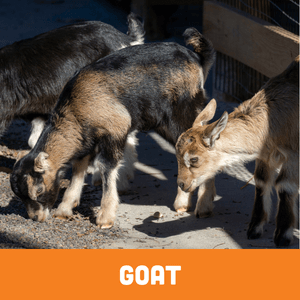
Goats
Capra aegagrus hircusCONSERVATION STATUS
Least ConcernNATURAL HABITAT
Many different goat species inhabit farmland.DIET
IN THE WILD – Leafy plants, hay, grains, and browse
IN THE ZOO – Leafy plants, hay, grains, and browseFASCINATING FACTS
• Goats are one of the oldest domesticated animals.
• Female goats typically have two offspring at a time.
• Goats are known for their incredible agility and climbing abilities.
• Domestic goats come in a variety of shapes, colors, and sizes.
• Some breeds of goats can jump to heights of more than 5 feet. -
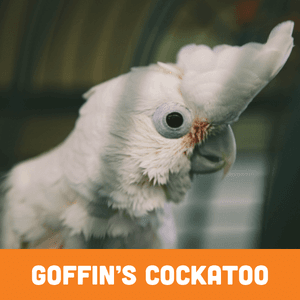
Goffin's Cockatoo
Cacatua goffiniCONSERVATION STATUS
Near ThreatenedNATURAL HABITAT
Goffin's cockatoos live in the Tenimber Islands of Indonesia.DIET
IN THE WILD – Seeds and nuts
IN THE ZOO – Parrot chow, fruits, and seedsFASCINATING FACTS
• Goffin's cockatoos are social and friendly.
• Goffin's cockatoos are the smallest cockatoo species.
• They live 30+ years.
• They were introduced to the wild in Puerto Rico, Singapore, and Kai Islands.
• Deforestation and bird trade affect its population. -
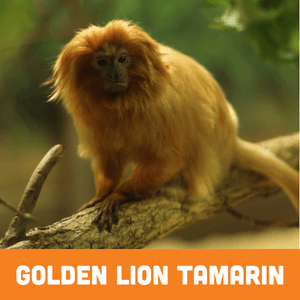
Golden Lion Tamarin
Leontopithecus rosaliaCONSERVATION STATUS
EndangeredNATURAL HABITAT
The Golden lion tamarin lives in a small area of the tropical rainforest in south eastern Brazil.DIET
IN THE WILD – Fruits and insects
IN THE ZOO – Fruits, vegetables, and insectsFASCINATING FACTS
• Golden lion tamarins are the largest member of the marmoset and tamarin group.
• They have claws instead of nails, enabling them to grab insects in tight spots.
• They sleep in hollow tree cavities or dense vines.
• They also sleep in different dens each day, making it harder for predators to find them. -
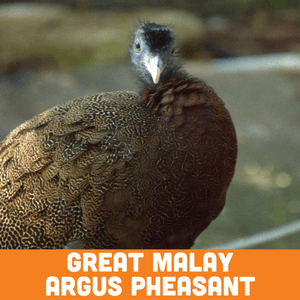
Great Malay Argus Pheasant
Argusianus argusCONSERVATION STATUS
VulnerableNATURAL HABITAT
The Great Malay Argus Pheasant lives in dry, lowland primary and logged forests.DIET
IN THE WILD – Fruits, ants, slugs, snails, meat, and insects
IN THE ZOO – Fruits, vegetables, greens, seeds, insects, and bird feed pelletsFASCINATING FACTS
• A male's call can travel up to a half a mile.
• Females look different from males and are easy to tell apart.
• Males have longer wing and tail feathers than females.
• Males have feathers with "eyes" on them called "ocelli." -
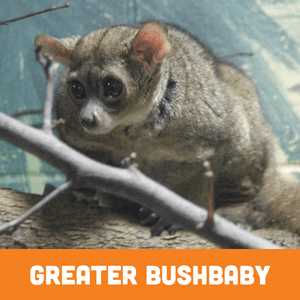
Greater Bushbaby
Otolemur crassicaudatusCONSERVATION STATUS
Least ConcernNATURAL HABITAT
The greater bushbaby lives in the coastal and highland forests of Eastern Africa.DIET
IN THE WILD – Insects, sap from trees, fruit, and seeds
IN THE ZOO – Fruit, vegetables, insects, insectivore pellets, and gels packed with nutrientsFASCINATING FACTS
• Their ears can flex and fold when needed to listen for sounds and to protect them when moving through the forest.
• They have a second tongue, made of cartilage, underneath the regular tongue that's used for grooming.
• They urinate on their hands to scent mark and grip branches better.
• Newborns weigh less than half an ounce. -
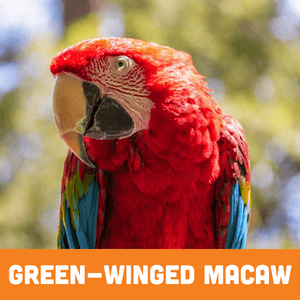
Green-Winged Macaw
Ara chloropterusCONSERVATION STATUS
Least ConcernNATURAL HABITAT
The green-winged macaw lives in the tropical rainforests of South America.DIET
IN THE WILD – Nuts, seeds, and fruit
IN THE ZOO – Nuts, seeds, and fruitFASCINATING FACTS
• Green-winged macaws mate with one partner for life.
• Green-winged macaws are able to imitate human sounds and voices.
• They fly up to 35 mph.
• Macaws are left or right footed. -
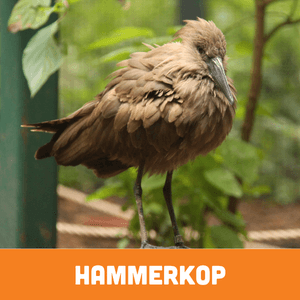
Hammerkop
Scopus umbrettaCONSERVATION STATUS
Least ConcernNATURAL HABITAT
Hammerkops live in diverse habitats, most often in savannas and woodlands.DIET
IN THE WILD – Tadpoles, insects, small fish, and occasionally small mammals
IN THE ZOO – Fish, meat, and grainFASCINATING FACTS
• They make three-tiered nests that can be strong enough to hold a human.
• They stand on hippos to look for frogs to eat.
• Hammerkops are the smallest African stork.
• The long, flat crest on their head that looks like a hammer gave them their name. -
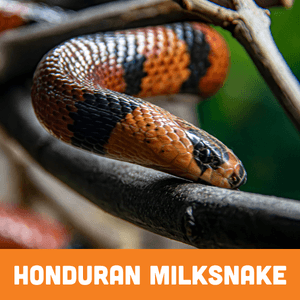
Honduran Milksnake
Lampropeltis triangulum hondurensisCONSERVATION STATUS
Least ConcernNATURAL HABITAT
Honduran milksnakes live in low to medium elevations of tropical areas of Central America.DIET
IN THE WILD – Small mammals, birds, eggs, and other snakes
IN THE ZOO – MiceFASCINATING FACTS
• Honduran milksnakes can live up to 20 years.
• Honduran milksnakes protect themselves from predators with their bright, poisonous-looking color.
• Their name comes from the myth that they drank cow's milk.
Conservation
Lincoln Children’s Zoo is committed to animal conservation efforts and saving animals from extinction. Home to over 30 endangered animals, the Zoo strives to provide the highest-quality care to these near extinct species. Lincoln Children’s Zoo partners with organizations throughout the world that manage captive animals and wild animals with a goal to create a plan to ensure endangered animals are saved and protected for future generations.
The Zoo is part of the Association of Zoos & Aquarium’s Species Survival Plan, which oversees the management of select species with the goal of enhancing conservation in the wild. Species Survival Plan is led by expert advisors who work together to manage the demographic distribution and long-term sustainability of nearly 500 species.
Photo Ark Collaboration
Lincoln Children’s Zoo collaborates with National Geographic photographer Joel Sartore and his Photo Ark project. The Photo Ark is a groundbreaking effort to document species before they disappear and to get people to care while there’s still time. The Photo Ark started at Lincoln Children’s Zoo with the first photograph taken of a naked mole rat. To date the Photo Ark has documented 10,531 species. Find out more about Joel Sartore’s Photo Ark here.