


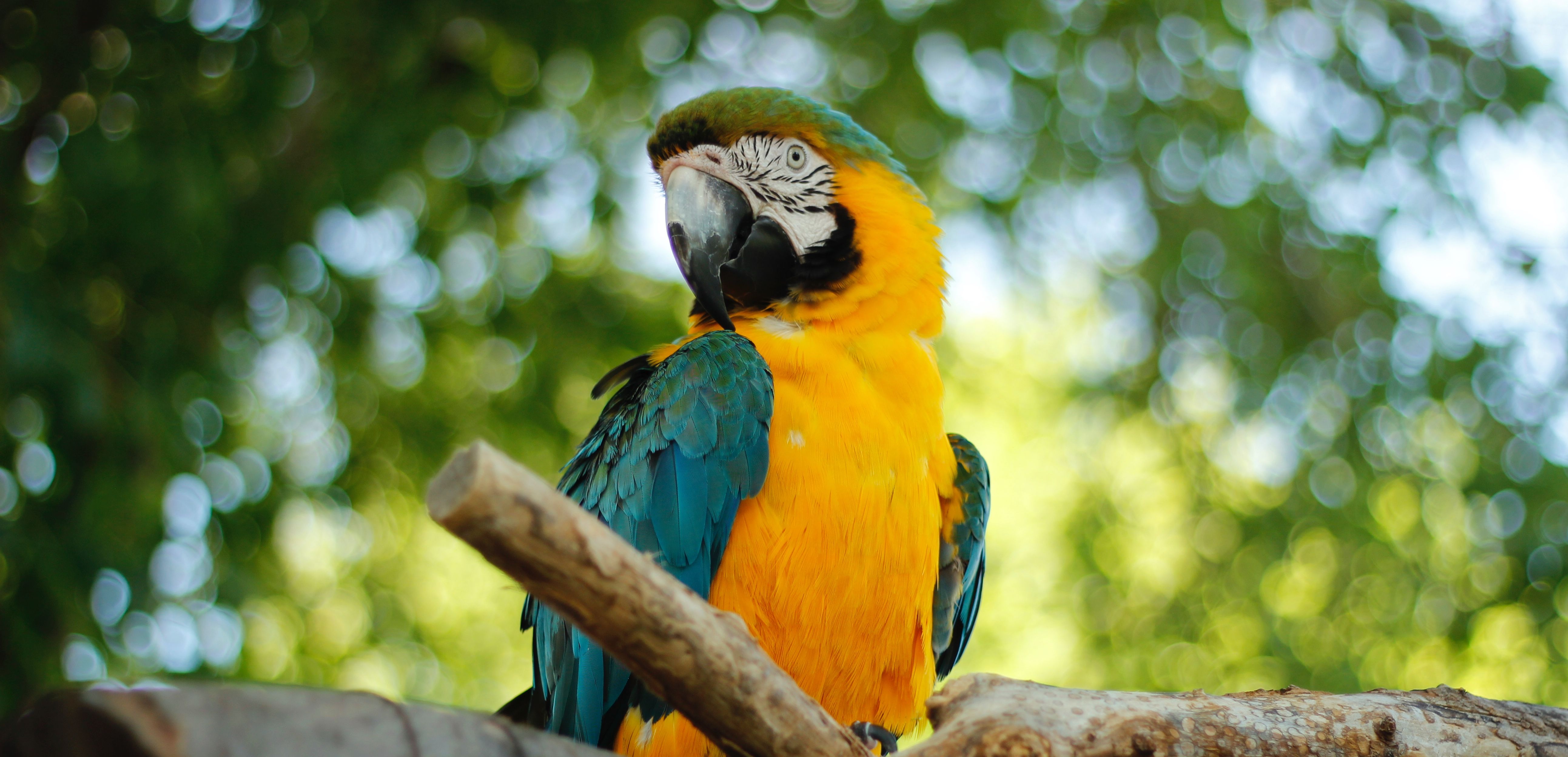
Animals
Lincoln Children’s Zoo is home to over 400 animals including giraffes, cheetahs, tigers, giant anteaters, red pandas, Humboldt penguins, ring-tailed lemurs, and Galapagos tortoises. Learn more about each of the animals that live here by exploring the areas below.
*This is not an all inclusive list of the animals at Lincoln Children's Zoo


-
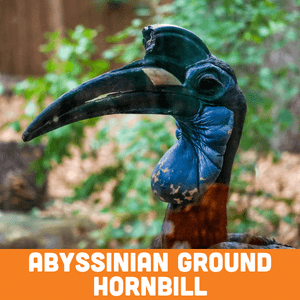
Abyssinian Ground Hornbill
Bucorvus abyssinicusCONSERVATION STATUS
VulnerableNATURAL HABITAT
Abyssinian ground hornbills live in savannas, grasslands, and scrub across north-central Africa from Senegal and Guinea on the western coast to Ethiopia on the eastern coast.DIET
IN THE WILD – Insects, small birds, and rodents
IN THE ZOO – Insects, rodents, and meatFASCINATING FACTS
• Abyssinian ground hornbills typically nest in trees, using cavities in tree trunks, cliffs, or riverbanks.
• They often move about on the ground, walking or running to find food.
• Thy are similar in size to a wild turkey (about 40 inches long).
• Their noticeable “eyelashes” are actually modified feathers that
protect their eyes from dust and debris. -
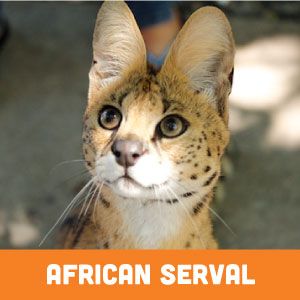
African Serval
Leptailurus servalCONSERVATION STATUS
Least ConcernNATURAL HABITAT
African servals live in savannas in Sub-Saharan Africa.DIET
IN THE WILD – Rodents, insects, reptiles, birds, and frogs
IN THE ZOO – Special carnivore diet of ground meat, rodents and bonesFASCINATING FACTS
• African servals can jump more than 10 feet straight up to grab a bird right out of the air.
• Servals use their long forelimbs to reach into burrows or to hook fish out of the water.
• Their extra-long neck and legs give them the nickname “giraffe cat.”
• The serval has the longest legs and largest ears for its body size of any cat. If we had ears in the same proportion to our head as servals do, they would be the size of dinner plates.
• Johnny shows his zookeepers he loves them by bumping his head into them! -
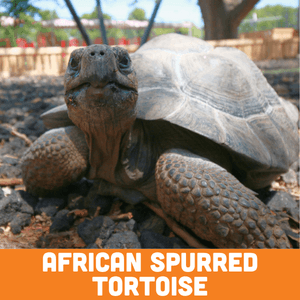
African Spurred Tortoise
Geochelone sulcataCONSERVATION STATUS
EndangeredNATURAL HABITAT
The African spurred tortoise lives in hot arid regions ranging from desert fringes to dry savannas.DIET
IN THE WILD – Grasses and plants
IN THE ZOO – Greens, hay, vegetables, and specially formulated tortoise chowFASCINATING FACTS
• The African spurred tortoise is the largest tortoise on the African mainland.
• They will dig themselves into the ground to survive extended periods of drought.
• Females lay 15 to 30 eggs.
• They can be very aggressive, especially during mating season.
• Males can be seen ramming into each other in attempts to flip one another over. -
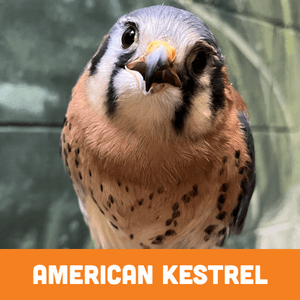
American Kestrel
Falco sparveriusCONSERVATION
Least concernNATURAL HABITAT
The American kestrel lives in North and Central America.DIET
IN THE WILD – Insects, lizards, mice, and other small birds
IN THE ZOO – Insects and rodentsFASCINATING FACTS
• American kestrel are the only species of kestrel found in North America.
• They are the smallest falcon in North America.
• They average six to eight inches in height.
• They nest 10 to 30 feet high in tree cavities. -
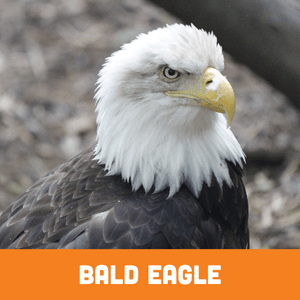
Bald Eagle
Haliaeetus leucocephalusCONSERVATION STATUS
Least ConcernNATURAL HABITAT
The Bald eagle nests in trees in North America near large bodies of open water where they can find an abundance of fish.DEIT
IN THE WILD – Fish, carrion, small mammals, and reptiles
IN THE ZOO – Fish and rodentsFASCINATING FACTS
• Bald eagles can see up to 1.5 miles.
• Bald eagles can carry eight pounds of food while flying.
• They are known for building large nests.
• The largest recorded nest was nine feet wide and weighed more than two tons.
• The Zoo’s eagles are injured birds that have been rehabilitated and are not able to be released into the wild. -
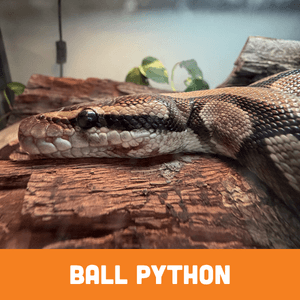
Ball Python
Python regiusCONSERVATION STATUS
Near ThreatenedNATURAL HABITAT
Ball pythons live in Central and West Africa.DIET
IN THE WILD – Mice, frogs, and other small mammals
IN THE ZOO – Mice, frogs, and other small mammalsFASCINATING FACTS
• Ball pythons are arboreal, meaning they spend most of their time in trees.
• Female ball pythons will curl around eggs until they hatch.
• Both females and males stop eating during mating season, which is September to February. -
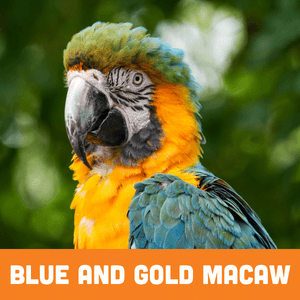
Blue and Gold Macaw
Ara araraunaCONSERVATION STATUS
Least ConcernNATURAL HABITAT
The macaw is found in forests, rainforests, woodlands or savanna-like habitats depending on species.DIET
IN THE WILD – Fruit, nuts, and seeds
IN THE ZOO – Nuts, seeds, apples, and bananasFASCINATING FACTS
• Macaws are able to imitate human sounds and voices.
• Macaws mate with one partner for life.
• Macaws are usually found in pairs, but they can be seen in flocks of up to 30.
• They use their beak as a third foot when climbing.
• Macaws can travel up to 35 mph due to wide wingspan and hollow bones. -
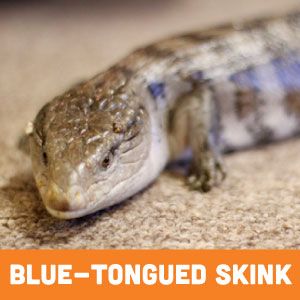
Blue-tongued Skink
Tiliqua scincoidesCONSERVATION STATUS
Least ConcernNATURAL HABITAT
Blue-tongued skinks live in Eastern Australia.DIET
IN THE WILD – Insects, snails, carrion, wildflowers, fruit, and berries
IN THE ZOO – Insects and fruitFASCINATING FACTS
• Their tail can grow back if it breaks off.
• They stick out their tongue and hiss to threaten other animals. -
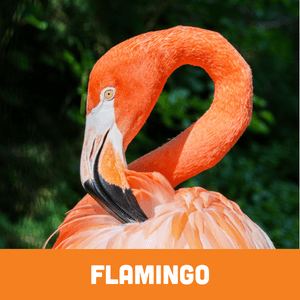
Caribbean Flamingo
Phoenicopterus ruberCONSERVATION
Least concernNATURAL HABITAT
The Caribbean flamingo prefers to live in tropical and warm temperate climates.DIET
IN THE WILD – Small shrimp, invertebrates, and blue-green algae
IN THE ZOO – Specially formulated and enriched grainFASCINATING FACTS
• Flamingos fly at speeds up to 31 and 37 mph.
• Their pink coloring is caused by the beta carotene in shrimp.
• Flamingos stand on one leg to reduce heat loss through the legs and feet.
• They can sleep standing on one leg. -
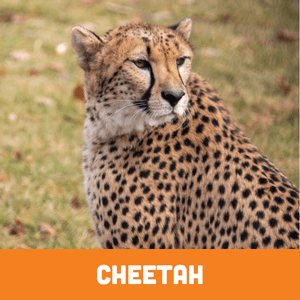
Cheetah
Acinonyx jubatusCONSERVATION
VulnerableNATURAL HABITAT
Cheetahs are found in grasslands, savannas, areas with dense vegetation, and mountainous regions.DIET
IN THE WILD – Variety of small antelope, rabbits, warthogs, gazelles, and birds
IN THE ZOO – Specialized carnivore diet, whole prey, and bonesFASCINATING FACTS
• Cheetahs are the fastest land mammal in the world, reaching speeds of 70 mph in three seconds, which is faster than the acceleration of a sports car!
• They are the only big cat that cannot roar but they often purr, especially when close to other cheetahs.
• Cheetahs have built-in sun glare protection that runs from the inside corner of their eyes down to the outside edges of their mouth. This helps them hunt their prey in direct sunlight by reflecting the sun’s glare.
• Their eyesight is exceptional, allowing them to spot their prey over three miles away.
• Cheetahs use their tail to control their steering and keep balance while they are running at top speed.
• They have special semi non-retractable claws that work like football cleats and provide traction while running. -
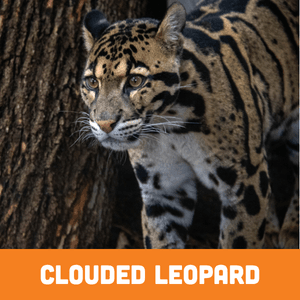
Clouded Leopard
Neofelis nebulosiCONSERVATION
VulnerableNATURAL HABITAT
Clouded leopards are found in the forests of southeast Asia.DIET
IN THE WILD – Primates, deer, wild boar, and birds
IN THE ZOO – Fortified meat-bases diet and bonesFASCINATING FACTS
• Their canine teeth are the longest of any feline in relation to their body size.
• Males can be twice the size of females, making it the largest gender size difference in the cat family.
• Clouded leopards are one of two cat species that can climb down a tree head first because of their specialized anklebones.
• Despite their name, clouded leopards are not a species of leopard at all. They are a unique cat with their own genus and are considered to be the "bridge" between big cats and the small cats. -
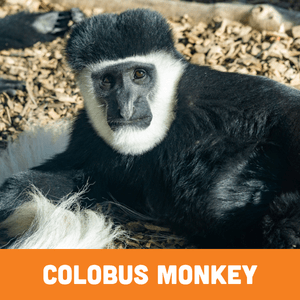
Black and White Colobus Monkey
Colobus guerezaCONSERVATION STATUS
Least ConcernNATURAL HABITAT
Colobus monkeys are found in forests and wooded grasslands of central Africa.DIET
IN THE WILD – Leaves, unripe fruit, seeds, flowers, and bark
IN THE ZOO – Leafy greens and fiber nutrition biscuitsFASCINATING FACTS
• Colobus monkeys are mostly an arboreal species found in tree tops.
• They have a multi-chambered stomach.
• They belch in each others faces as a form of socialization.
• Colobus monkeys have four fingers and no true thumb.
• They are born pure white and achieve adult coloration at six months old.
• They are able to leap 20-30 feet through the tree canopy. -
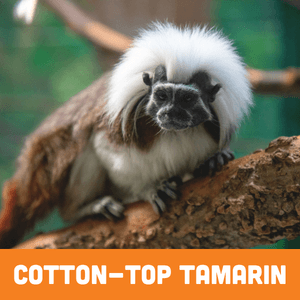
Cotton-top Tamarin
Saguinus oedipusCONSERVATION STATUS
Critically EndangeredNATURAL HABITAT
Cotton-top tamarins are found in rainforests and open woodlands of Columbia.DIET
IN THE WILD – Fruit, insects, sap, fallen eggs, nectar, small invertebrates, and seeds
IN THE ZOO – Fruit and insectsFASCINATING FACTS
• Cotton-top tamarins live in groups of 2 to 14 individuals.
• Groups are led by the oldest female.
• While the others sleep, one tamarin stays on guard to protect them from predators.
• Each group member is groomed equally in order to maintain their bond.
• They use scent marking to secure their territory. -
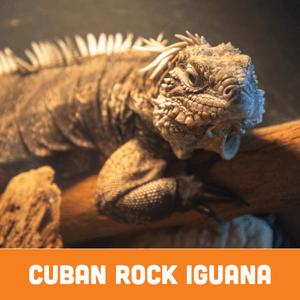
Cuban Rock Iguana
Cyclura nubileCONSERVATION STATUS
VulnerableNATURAL HABITAT
The Cuban rock iguana is found in coastal regions.DIET
IN THE WILD – Leaves, flowers, fruit, and insects
AT THE ZOO – Fruits, vegetables, and leafy greensFASCINATING FACTS
• Cuban rock iguanas are able to make a 40 foot leap out of the trees and land safely on solid ground.
• They can hold their breath underwater for 30 minutes.
• They use their strong jaws, razor sharp teeth, and strong tail to protect themselves from predators.
• They're one of the world's largest iguanas, weighing up to 15 pounds and growing up to 5 feet in length. -

Dromedary Camel
Camelus dromedariusCONSERVATION STATUS
Least ConcernNATURAL HABITAT
The Dromedary camel roams in arid regions throughout northern Africa, the Arabian
Peninsula, and western Asia.DIET
IN THE WILD – Any vegetation they find
IN THE ZOO – Hay and specially formulated grainFASCINATING FACTS
• They can drink 30 gallons of water in 13 minutes.
• They store fat in their hump, not water.
• They have flat, round feet to keep them from sinking in the sand.
• They're no longer considered wild animals. In Africa and Arabia, they are semi-domesticated animals that have free range but are under the control of herders.
Conservation
Lincoln Children’s Zoo is committed to animal conservation efforts and saving animals from extinction. Home to over 30 endangered animals, the Zoo strives to provide the highest-quality care to these near extinct species. Lincoln Children’s Zoo partners with organizations throughout the world that manage captive animals and wild animals with a goal to create a plan to ensure endangered animals are saved and protected for future generations.
The Zoo is part of the Association of Zoos & Aquarium’s Species Survival Plan, which oversees the management of select species with the goal of enhancing conservation in the wild. Species Survival Plan is led by expert advisors who work together to manage the demographic distribution and long-term sustainability of nearly 500 species.
Photo Ark Collaboration
Lincoln Children’s Zoo collaborates with National Geographic photographer Joel Sartore and his Photo Ark project. The Photo Ark is a groundbreaking effort to document species before they disappear and to get people to care while there’s still time. The Photo Ark started at Lincoln Children’s Zoo with the first photograph taken of a naked mole rat. To date the Photo Ark has documented over 18,000 species. Find out more about Joel Sartore’s Photo Ark here.