


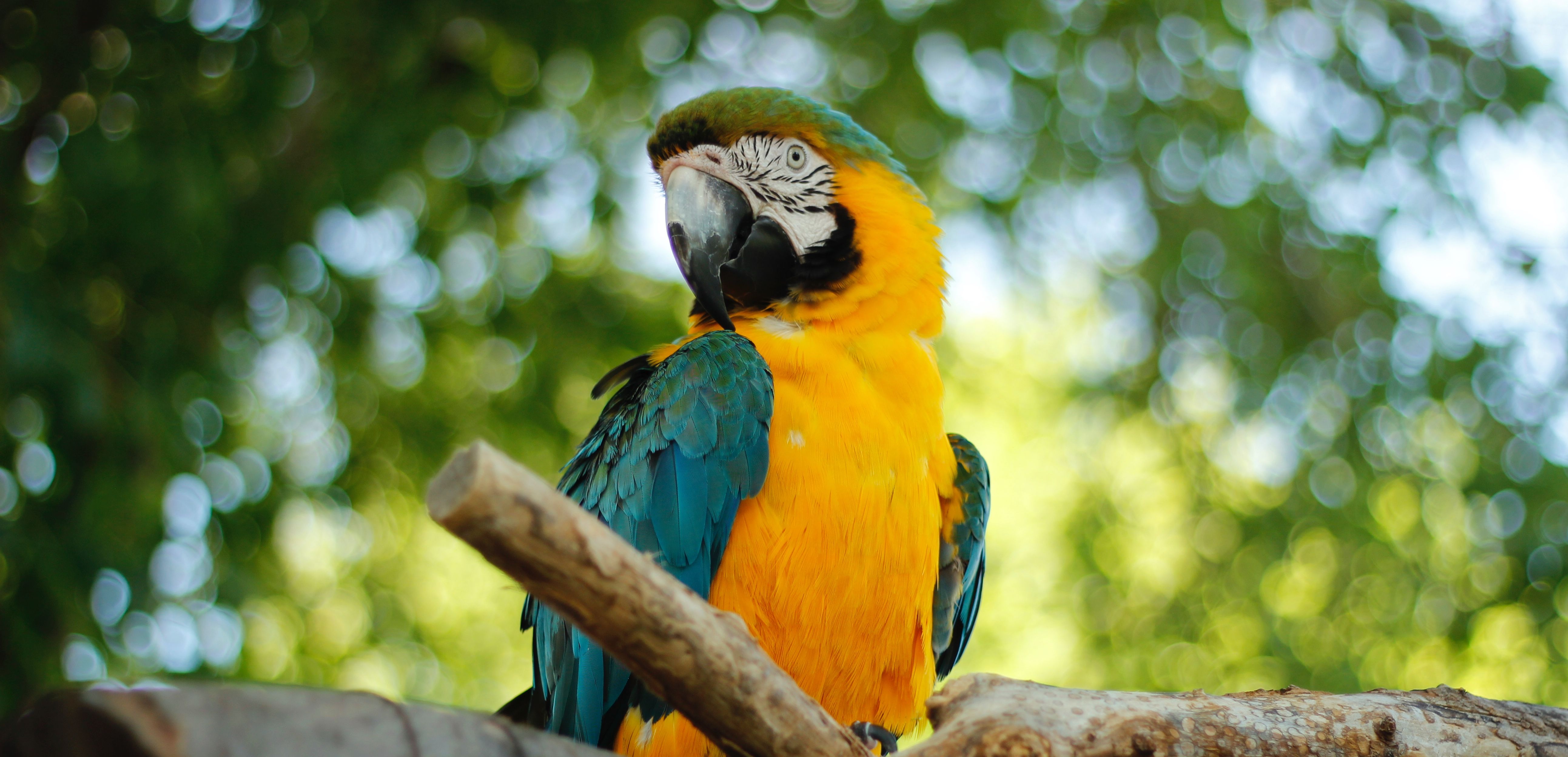
Animals
Lincoln Children’s Zoo is home to over 400 animals including giraffes, cheetahs, tigers, giant anteaters, red pandas, Humboldt penguins, ring-tailed lemurs, and Galapagos tortoises. Learn more about each of the animals that live here by exploring the areas below.
*This is not an all inclusive list of the animals at Lincoln Children's Zoo


-
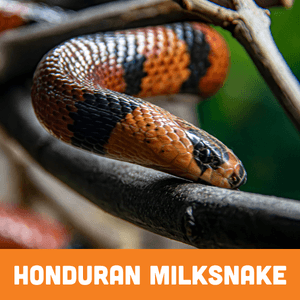
Honduran Milksnake
Lampropeltis triangulum hondurensisCONSERVATION STATUS
Least ConcernNATURAL HABITAT
Honduran milksnakes live in low to medium elevations of tropical areas of Central America.DIET
IN THE WILD – Small mammals, birds, eggs, and other snakes
IN THE ZOO – MiceFASCINATING FACTS
• Honduran milksnakes can live up to 20 years.
• Honduran milksnakes protect themselves from predators with their bright, poisonous-looking color.
• Their name comes from the myth that they drank cow's milk. -

Humboldt Penguin
Spheniscus humboldtiCONSERVATION STATUS
VulnerableNATURAL HABITAT
The Humboldt penguin lives near rocky shores in the Humboldt Current of Pacific coast Chile and Peru.DIET
IN THE WILD – Fish, squid, and krill
IN THE ZOO – Trout, herring, smelt, and capelinFASCINATING FACTS
• Adults weigh approximately 8-10 pounds and are 15-18 inches tall.
• These underwater "flyers" swim up to 17 miles per hour.
• Penguins lose and replace all feathers once a year in a process called molting.
• On average, each of the Zoo's penguins eat two pounds of fish per day. -
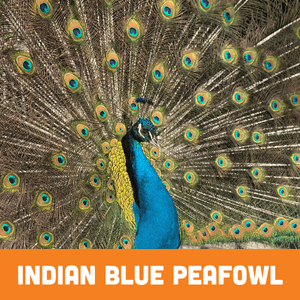
Indian Blue Peafowl
Pavo cristatusCONSERVATION STATUS
Least ConcernNATURAL HABITAT
Peafowl are found in moist and dry deciduous forests and prefer sites where water is available.DIET
IN THE WILD – Seeds, insects, fruit, small mammals, and reptiles
IN THE ZOO – Fruits, vegetables, seeds, and meatFASCINATING FACTS
• Males are referred to as peacocks, females are peahens, and offspring are peachicks.
• They have 11 different calls.
• Males have an extravagant train of feathers.
• Males don’t develop the long train of feathers until age two. -
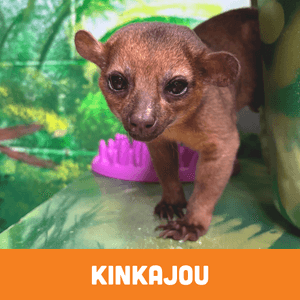
Kinkajou
Potos flavusCONSERVATION STATUS
Least ConcernNATURAL HABITAT
Kinkajous live in tropical forests of Central and South America.DIET
IN THE WILD – Fruits, insects, nectar, and honey
IN THE ZOO – Fruits and insectsFASCINATING FACTS
• Kinkajous are part of the Procyonidae family.
• They have they nickname "Night Walkers" in Belize.
• A kinkajou's hearing is very sharp.
• They are able to turn their feet in the opposite direction and run backward just as quickly as they run forward. -
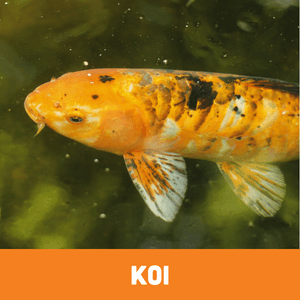
Koi Fish
Cyprinus carpioCONSERVATION STATUS
Least ConcernNATURAL HABITAT
Koi fish are found in freshwater ponds in Japan.DIET
IN THE WILD – Plants and shrimp
IN THE ZOO – Plants and specialized koi foodFASCINATING FACTS
• They typically live 25 to 35 years. If cared for properly, some can live up to 200 years!
• Without a good filtration system in their pond, koi would poison themselves, as they excrete ammonia.
• Koi are susceptible to sunburn. -
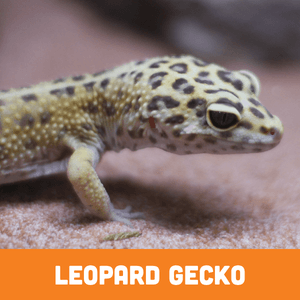
Leopard Gecko
Eublepharis maculariusCONSERVATION STATUS
Least ConcernNATURAL HABITAT
Leopard geckos live in Northern India, Pakistan, Afghanistan, Iran, and Iraq.DIET
IN THE WILD – Insects
IN THE ZOO – InsectsFASCINATING FACTS
• Leopard geckos store fat in their tails.
• Unlike most geckos, they have movable eyelids.
• They replace their 100 teeth every three to four months. -
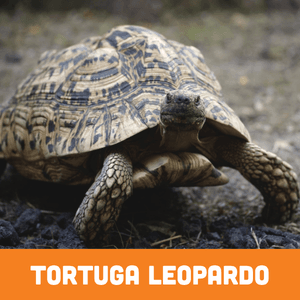
Leopard Tortoise
Stigmochelys pardalisCONSERVATION STATUS
Least ConcernNATURAL HABITAT
The leopard tortoise lives in savannah regions.DIET
IN THE WILD – Fallen fruit, vines, grasses, wild mushrooms, and leaves
IN THE ZOO – Various greens, hay, and specially formulated tortoise chowFASCINATING FACTS
• Females lay up to 30 eggs in a nest 10 inches deep.
• They can live 80 to 90 years.
• They depend on other senses to find food and avoid predators.
• They have a row of small toenails enabling them to dig.
• They can go underwater for up to 10 minutes. -
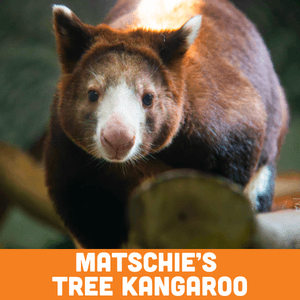
Matschie's Tree Kangaroo
Dendrolagus matschieiCONSERVATION STATUS
EndangeredNATURAL HABITAT
The Matschie's tree kangaroo can be found in mountainous areas of the rainforest.DIET
IN THE WILD – Leaves, nuts, and mosses
IN THE ZOO – Lettuce, fruits, vegetables, and specially formulated biscuitsFASCINATING FACTS
• Matschie's tree kangaroos spend most of their time in trees, coming down occasionally to feed.
• They lick forearms, letting the evaporation cool their bodies instead of sweating.
• Fetus-like young crawl into mother's pouch after birth.
• Babies are called joeys and stay in the mother's pouch for ten months. -
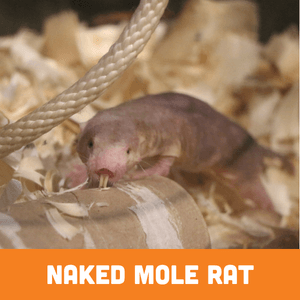
Naked Mole Rat
Heterocephalus glaberCONSERVATION
Least concernNATURAL HABITAT
Naked mole rats live underground in the grasslands of Eastern Africa.DIET
IN THE WILD – Root tubers
IN THE ZOO – Vegetables and fruitFASCINATING FACTS
• Naked mole rats are eusocial, meaning they live in large colonies with one queen while the rest of the colony are workers.
• Naked mole rats live in complex burrowing systems made up of tunnels and chambers.
• Each chamber has a specific function: toilet, nesting, and food storage. -
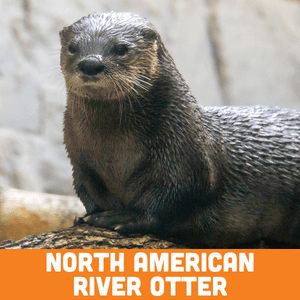
North American River Otter
Lontra canadensisCONSERVATION STATUS
Least ConcernNATURAL HABITAT
The North American river otter lives in lakes, rivers, wetlands, coastal shorelines, marshes, and estuaries.DIET
IN THE WILD – Fish, frogs, insects, crustaceans, and small mammals
IN THE ZOO – Fish, meat, and carrotsFASCINATING FACTS
• They are members of the weasel family.
• They have waterproof fur that protects their skin and keeps it warm and dry.
• They can dive to a depth of 60 feet.
• They enjoy sliding down muddy hills, bouncing objects in their paws, playing tag, and wrestling. -
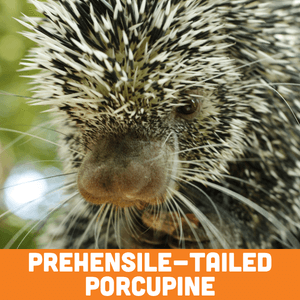
Prehensile-tailed Porcupine
Coendou prehensilisCONSERVATION STATUS
Least ConcernNATURAL HABITAT
Prehensile-tailed porcupines live in trees in South American forests.DIET
IN THE WILD – Leaves, flowers, roots, and shoots
IN THE ZOO – Fruit/vegetable mix and rodent blockFASCINATING FACTS
• DNA tests are needed to find out if the porcupine is male or female.
• Prehensile-tailed porcupines stomp their feet to scare attackers.
• They are nocturnal.
• Renzo’s favorite treat is peanuts! -
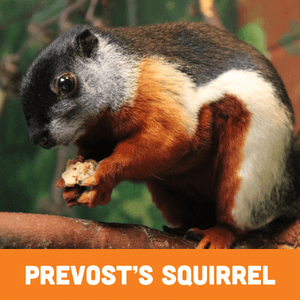
Prevost's Squirrel
Callosciurus prevostiiCONSERVATION STATUS
Least ConcernNATURAL HABITAT
The Prevost's squirrel is found in the trees of dense rain forests.DIET
IN THE WILD – Fruits, nuts, seeds, buds, flowers, insects, and bird eggs
IN THE ZOO – Fruits, vegetables, rodent blocks, and protein biscuitsFASCINATING FACTS
• Prevost's squirrels carry fruit away from trees and drop the seeds on the ground, producing new plants.
• One-year-olds can have up to thre litters of young each year.
• Each litter can have one to four young.
• They use their tails for balance when running and climbing and as a rudder when jumping.
• They communicate by trilling, whistling, or raising their tails. -
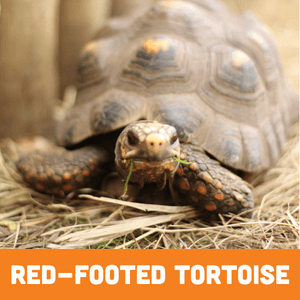
Red-Footed Tortoise
Chelonoidis carbonariusCONSERVATION STATUS
Least ConcernNATURAL HABITAT
The red-footed tortoise lives in drier forest areas, grasslands, savannas, and rainforest belts adjoining more open habitats.DIET
IN THE WILD – Fallen fruit, vines, grasses, wild mushrooms, and leaves
IN THE ZOO – Greens, hay, fruit, vegetables, and specially formulated tortoise chowFASCINATING FACTS
• The red-footed tortoise can live 40 to 50 years.
• They do not have teeth.
• They use sharp edges around their mouths to bite and chew food.
• They have a hard protective shell that is part of the skeleton which contains 59-61 bones covered by plates. -
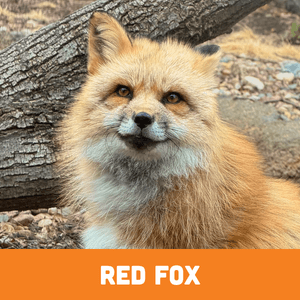
Red Fox
Vulpes vulpesCONSERVATION STATUS
Least ConcernNATURAL HABITAT
The red fox lives in a mix of open fields, forests, grasslands, and wetlands.DIET
IN THE WILD – Rodents, rabbits, birds, amphibians, and fruit
IN THE ZOO – Special diet of ground meat, rodents, fruit, and vegetablesFASCINATING FACTS
• Red foxes have excellent hearing! They can hear rodents digging miles underground.
• A group of foxes is called a skulk or a leash.
• The red fox is the largest of the fox species.
• Both male and female foxes help raise young.
• Foxes can be quite vocal. They make barks, howls, and whines.
• Red foxes tend to be solitary, except during breeding season. -
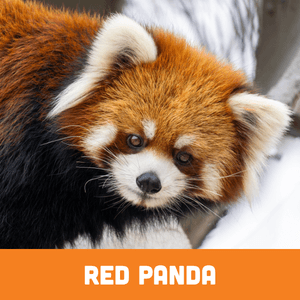
Red Panda
Ailurus fulgensCONSERVATION STATUS
EndangeredNATURAL HABITAT
The red panda prefers to live in mountainous forests with old trees and dense understories of bamboo.DIET
IN THE WILD – Bamboo, berries, nuts, eggs, flowers, and seeds
IN THE ZOO – Bamboo, apples, and specially formulated biscuitsFASCINATING FACTS
• Red pandas communicate with chipmunk-like sounds.
• Their long bushy tail helps them balance in trees and provides cover when sleeping.
• They have many nicknames- fire cat, lesser panda, common panda, and more.
• They are excellent tree climbers.
Conservation
Lincoln Children’s Zoo is committed to animal conservation efforts and saving animals from extinction. Home to over 30 endangered animals, the Zoo strives to provide the highest-quality care to these near extinct species. Lincoln Children’s Zoo partners with organizations throughout the world that manage captive animals and wild animals with a goal to create a plan to ensure endangered animals are saved and protected for future generations.
The Zoo is part of the Association of Zoos & Aquarium’s Species Survival Plan, which oversees the management of select species with the goal of enhancing conservation in the wild. Species Survival Plan is led by expert advisors who work together to manage the demographic distribution and long-term sustainability of nearly 500 species.
Photo Ark Collaboration
Lincoln Children’s Zoo collaborates with National Geographic photographer Joel Sartore and his Photo Ark project. The Photo Ark is a groundbreaking effort to document species before they disappear and to get people to care while there’s still time. The Photo Ark started at Lincoln Children’s Zoo with the first photograph taken of a naked mole rat. To date the Photo Ark has documented 10,531 species. Find out more about Joel Sartore’s Photo Ark here.